

ADVERTISEMENT:
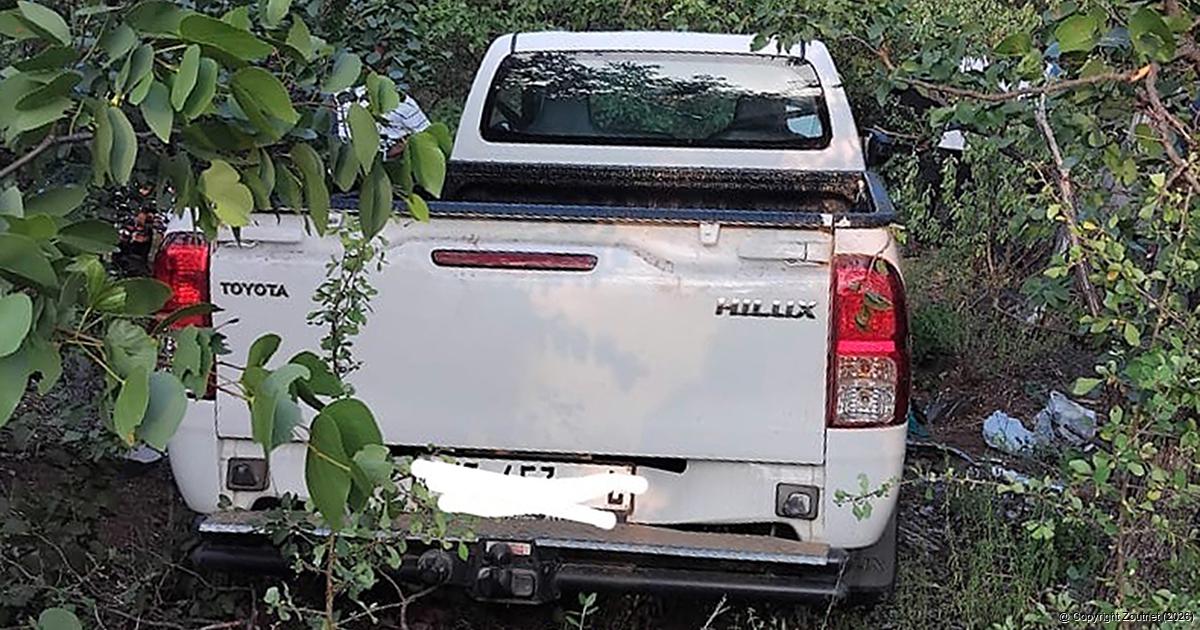
One of two vehicles recently recovered after being stolen with the intent of smuggling them across the Limpopo River into Zimbabwe. This bakkie was found abandoned at Gate 32 (Madimbo) near the Limpopo River without a radio system on 22 March. Incidents of cross-border smuggling from South Africa to Zimbabwe through the Limpopo River are happening far too frequently.
Collapse of border control threatens Mapungubwe World Heritage, says DA
News Date: 03 April 2025
The Democratic Alliance (DA) in Limpopo has formally written to Premier Phophi Ramathuba, urging her to mobilise government resources without delay to address the total collapse of border control near Mapungubwe National Park.
“This failure has fuelled a surge in organised smuggling syndicates that operate with impunity, exploiting the incapacity of safety and security forces that appear either unable—or unwilling—to act. As a result, the integrity and very existence of the park, and the sustainability of tourism and agriculture, are now in grave danger,” says Jacques Smalle, provincial spokesperson for the DA on Economic Development, the Environment, and Tourism in a press release.
Smalle indicates that they have also called for an urgent joint fact-finding mission involving the Agricultural, LEDET, and Safety & Security portfolio committees of the Limpopo Provincial Legislature to assess the crisis and witness first-hand the rampant lawlessness and its devastating consequences.
“This dire situation—the complete breakdown of border control between South Africa and Zimbabwe, the rise of brazen criminal networks, and the glaring impotence of our safety and security forces—was laid bare at a recent meeting convened by agricultural and tourism stakeholders. Representatives from SAPS, SANDF, BMA, and various government departments attended in search of solutions. Although there was verbal commitment to collaborate with the private sector, their lack of resources and inability to act was starkly exposed,” said Smalle.
It is well documented that organised syndicates are smuggling illegal cigarettes from Zimbabwe, but an even greater concern, according to Smalle, is the commercial smuggling of goats, raising the risk of Foot-and-Mouth Disease (FMD). “The impact could cripple South Africa’s agricultural export sector. Alarmingly, these syndicates seem to possess fraudulent veterinary certificates, pointing to collusion with government officials,” said Smalle.
Stolen vehicles are also being trafficked through this corridor into Zimbabwe. “Farmers report intimidation and threats from syndicates that operate with impunity—some even using drones to monitor law enforcement and local communities,” said Smalle.
All these factors, said Smalle, have turned Mapungubwe into a smuggling route and placed the park’s survival at risk. The absence of fencing and monitoring has led to a growing influx of elephants from Zimbabwe, straining the ecosystem; the illegal herding of livestock into the park for grazing, putting the integrity of the park at risk; the theft and vandalism of park infrastructure; and night poaching and predator poisoning, threatening biodiversity.
“The Greater Mapungubwe region—home to a national park, World Heritage Site and part of UNESCO’s Vhembe Biosphere Reserve—is not just an area rich in diverse ecosystems, species and cultural resources, but also a key pillar of Limpopo’s tourism and agricultural economy. Yet, poor governance has rendered the state incapable of protecting it,” said Smalle.
Poor border control and the lack of effective law enforcement also took centre stage during the launch of the Border and Immigration Anti-Corruption Forum (BMIACF) last week by Home Affairs Minister Leon Schreiber. Speaking at the launch in Pretoria on 25 March, Schreiber said that corruption in border management and immigration was driven by sophisticated syndicates exploiting institutional vulnerabilities. He warned that South Africa risked becoming a "syndicate society" where criminal networks dictate access to services instead of democratic institutions.
Playing into the hand of Smalle’s accusation that government officials are involved with these criminal activities, Schreiber gave some shocking statistics. “Between July 2024 and February 2025, 27 officials have been dismissed from the Department of Home Affairs for a range of offences, including fraud, corruption and sexual misconduct. We announced 18 of these dismissals in November last year and, since then, another nine officials have been dismissed. Once appeals that are currently ongoing are completed, this number is likely to increase further still,” Schreiber said.
The BMIACF represents a multi-stakeholder effort involving government agencies (such as the Hawks and NPA), civil society (such as Corruption Watch), and law enforcement. Schreiber emphasised that systemic reforms—such as closing loopholes in decision-making processes—were essential to prevent corruption.
Written by
Andries van Zyl
Andries joined the Zoutpansberger and Limpopo Mirror in April 1993 as a darkroom assistant. Within a couple of months he moved over to the production side of the newspaper and eventually doubled as a reporter. In 1995 he left the newspaper group and travelled overseas for a couple of months. In 1996, Andries rejoined the Zoutpansberger as a reporter. In August 2002, he was appointed as News Editor of the Zoutpansberger, a position he holds until today.

ADVERTISEMENT: