

ADVERTISEMENT:
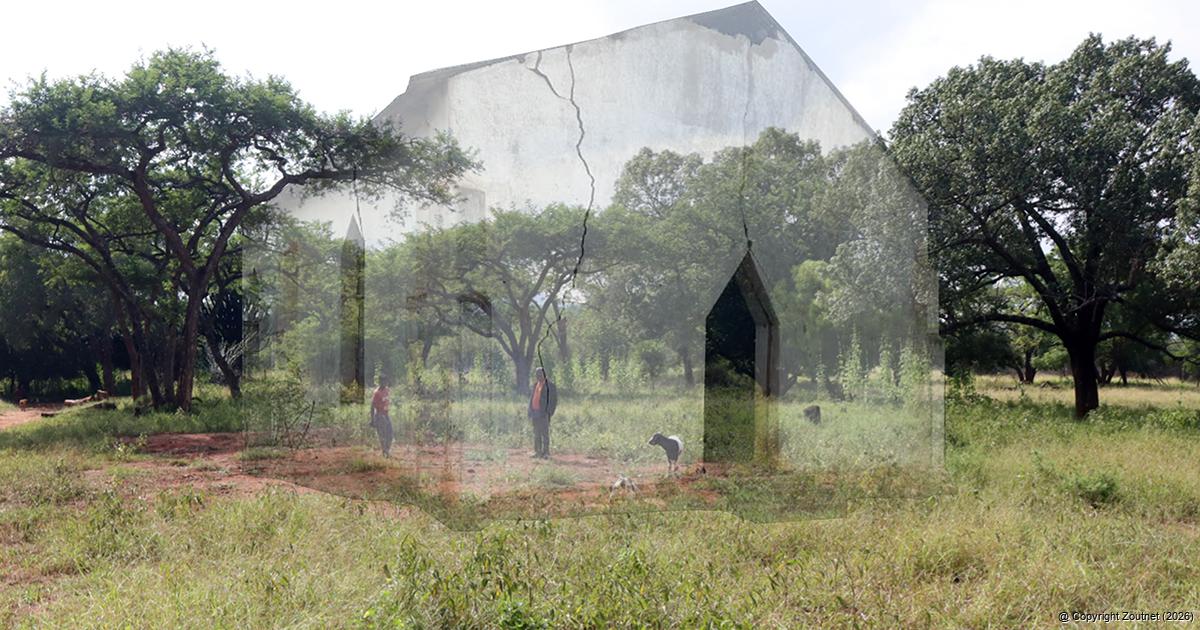
All that remains of the historic church is an empty piece of land where cattle and goats now graze. The overlay depicts where the once-proud church stood.
Demolition of historic Kranspoort buildings shocks heritage community
News Date: 25 April 2025
News that the historic church and school at the former Kranspoort Mission Station had been completely demolished came as a shock to many lovers of history and culture. The buildings, some more than 120 years old, were flattened at the end of 2024, apparently as a result of a dispute between two factions within the communal property association (CPA).
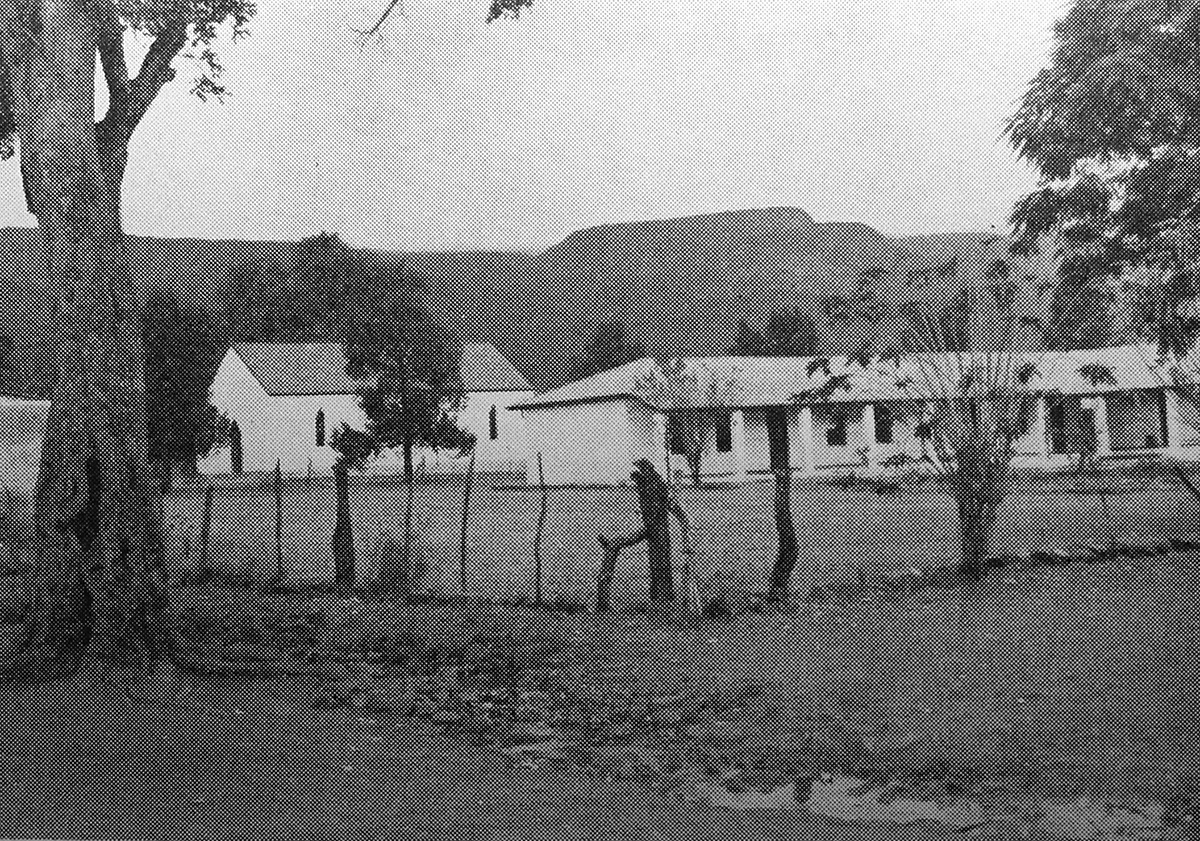
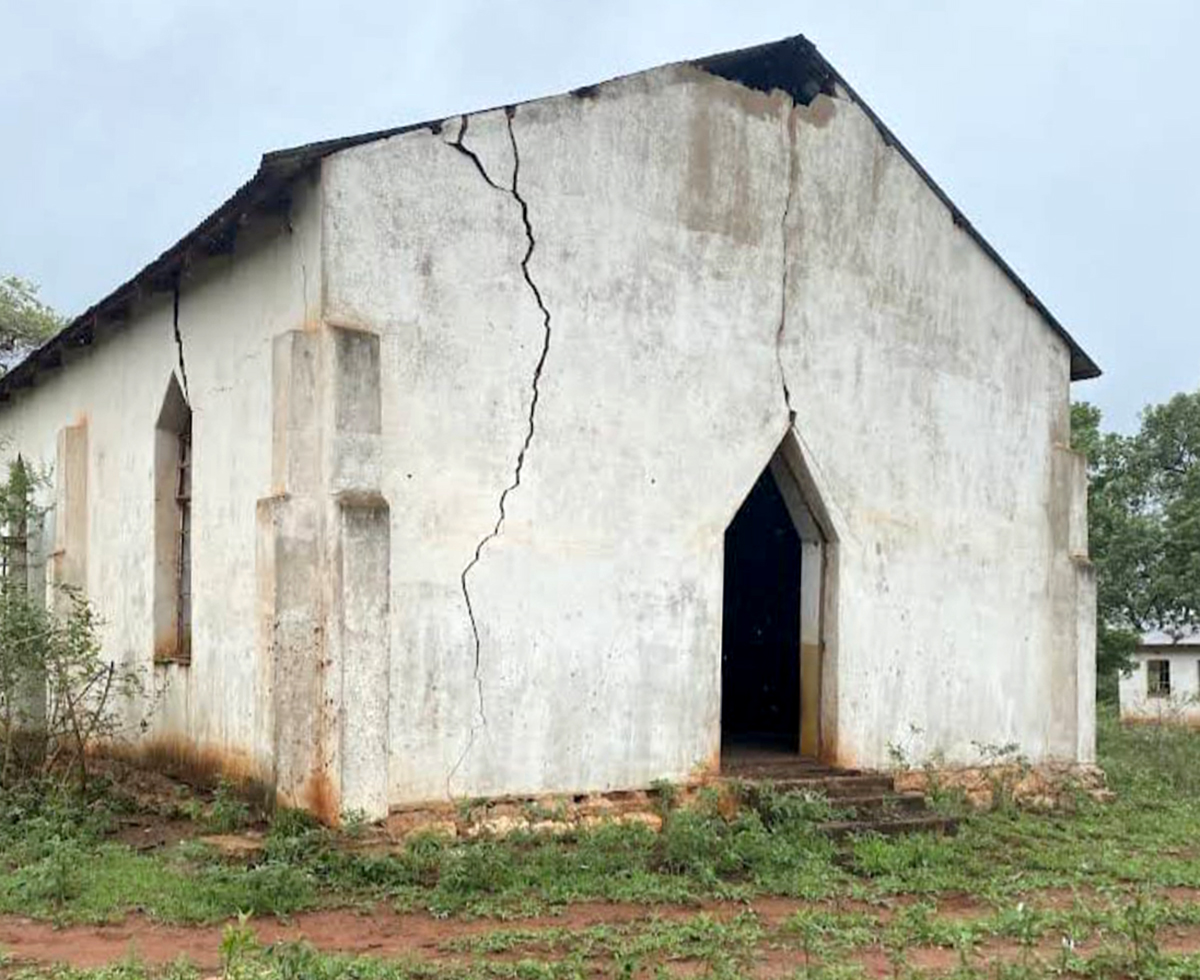
The Kranspoort Mission Station, near Buysdorp in the western Soutpansberg, is one of the earliest missionary stations established in the northern part of the country. The historic buildings destroyed included the church, built in 1904, the Stephanus Hofmeyr School and the rectory, built in 1940. Some of the materials were reportedly removed to the Kutama area for reuse, while most of the rubble was dumped in an old cement dam.
 |
|
The church and school at Kranspoort as they once looked. Photo: Lig in die Soutpansberg / Die Sendingwerk van die Nederduitse Gereformeerde Kerk in Noord-Transvaal 1863 – 1963. |
There is no indication that the group responsible for the demolition applied for permission to do so. In terms of the National Heritage Resources Act (Act 25 of 1999), any building older than 60 years is considered a heritage structure. A special permit, issued by the provincial heritage authority, is required for demolition. In this case, the Limpopo Provincial Heritage Resources Authority (LIHRA) would have had to grant approval.
 |
|
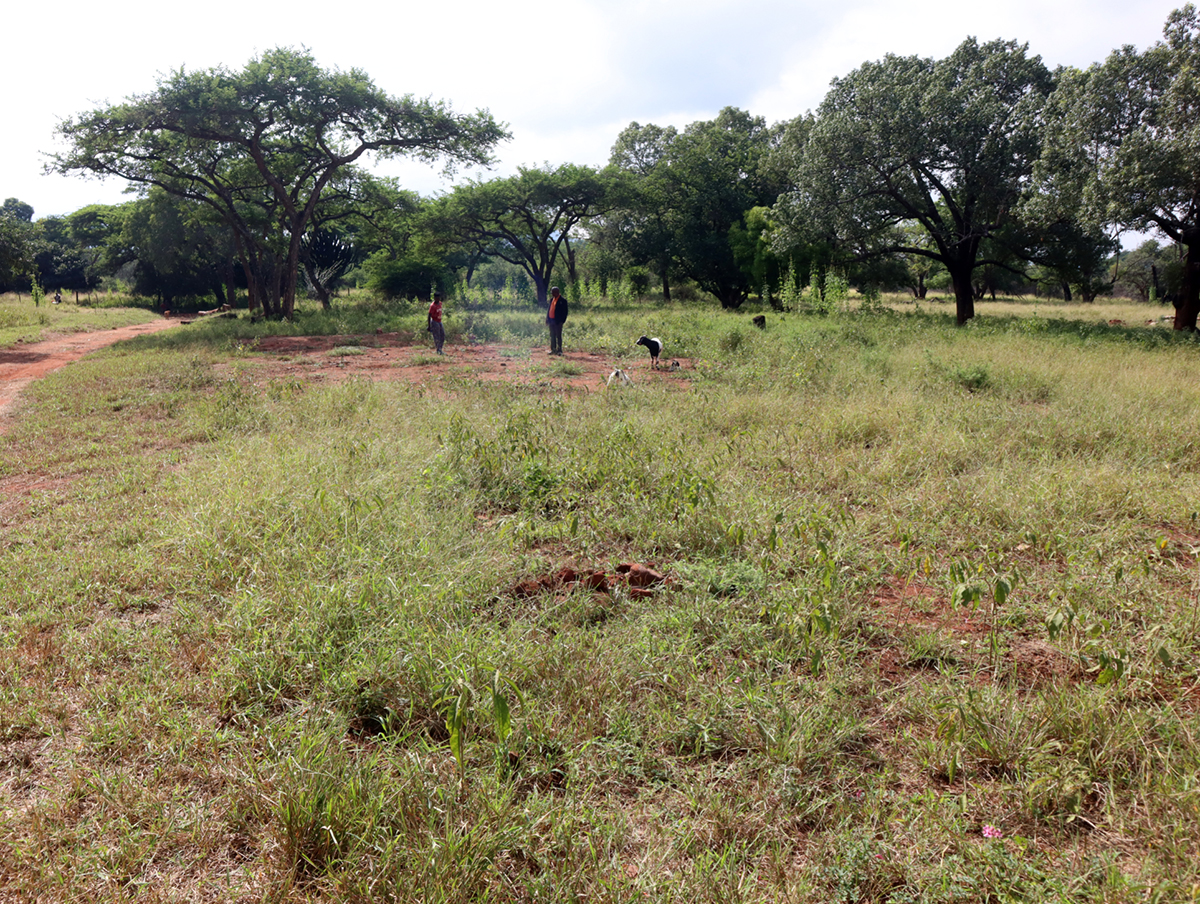
What remains of the historic church and school is only an empty piece of |
 |
|
A photo of the historic church at Kranspoort taken shortly before it was demolished. It was built in 1904. Photo supplied. |
A case of malicious damage to property was reportedly opened at the Mara Police Station, but it remains unclear whether the matter is being investigated or whether anyone will be prosecuted for contravening heritage protection laws.
A story that started in 1863
The history of the Kranspoort Mission Station dates back to May 1863, when Scottish reverend Alexander MacKidd and his wife, Hessie, arrived in the Soutpansberg at the invitation of the Buys community. At the time, the region was under the control of the Zuid-Afrikaansche Republiek (ZAR), which was suspicious of missionaries. Teaching the Gospel to black or coloured people was illegal, and special permission from the local magistrate was required.
The first mission station was established on the farm Goedgedacht, but MacKidd later bought Kranspoort, realising that more space was needed.
After MacKidd’s death in 1865, the young Rev Stephanus Hofmeyr took over and became the driving force behind the mission for the next four decades. Under his guidance, influential black missionaries such as Frederick Molepo and Sagaria Ramusha came to the fore.
Hofmeyr was not always popular among the conservative Afrikaner community, but he managed to expand the station and earned respect for his work. Over his 40 years of service, the congregation grew and a large contingent of predominantly Sotho-speaking people settled at Kranspoort.
When Hofmeyr died in 1904, he was buried at the foot of the mountains, among the congregation he had helped establish. The land was bequeathed to the Dutch Reformed Church, on condition that it be used for missionary purposes.
Hofmeyr’s son-in-law, Johannes Daneel, served as reverend at Kranspoort until 1935. Much like his predecessors, he was well loved and respected.
The ugly politics crept in
The mission station gradually developed into a flourishing area where spiritual teaching was combined with small-scale farming. One of those born at Kranspoort in 1945 was the well-known politician Dr Mamphela Ramphele. Both her parents were teachers at the Stephanus Hofmeyr School.
“It was an idyllic childhood and very rich environment with fruits and vegetables right through there,” she recalled in an interview facilitated by the George W. Bush Institute.
She also remembered the racial tensions that began surfacing, especially after the arrival of Rev Lucas van der Merwe in 1946. His approach to implementing rules about who could stay or had to leave the farm was criticised and eventually led to unrest.
“… that sparked a revolt, which divided the community and, in the end, that village was declared a white spot, a black spot in a white area. And so, people were removed en masse and literally scattered around the country,” she said.
The notorious Group Areas Act was used to forcibly remove many families to places such as Nancefield in Musina and Zamekomste. The Kranspoort Mission Station became a red herring for the Dutch Reformed Church, which was reluctant to take a firm stance against apartheid policies. The church later opted to sell the land, despite MacKidd and Hofmeyr’s wishes that it remain a mission station.
In 1997, the last remnant of Hofmeyr’s work – the Stephanus Hofmeyr Farm School – was closed.
The first successful land claim
The Kranspoort land claim was one of the first awarded in Limpopo. On 10 December 1999, judges Alan Dodson and Bakone Justice Moloto ruled in favour of the claimants. What made the case remarkable was that the land was awarded to people with no long-standing history of inhabiting the area. It was filed in 1998 by former residents who had been forcibly removed between 1955 and 1964.
The claim listed 125 entries on the main claimant list, compiled after a community verification process in March 1998.
The process did not proceed without difficulty. A CPA was established, and a business plan was drawn up to manage the property. CPA members claimed they received no funding to develop infrastructure or to cover operational costs for livestock, crop and fish farming, or ecotourism.
In February 2020, the Department of Agriculture, Land Reform and Rural Development granted the community R14 million in recapitalisation funding, to be paid in two tranches. The first tranche of R11 million would be followed by the balance once the initial amount had been fully utilised.
In December 2022, City Press reported that the department had erroneously paid another R11 million in April 2019 into the CPA’s account. The Kranspoort CPA alerted the department to the irregularity, but it took six months to reverse the payment. The CPA had to convince the department that the issue constituted possible fraud.
Trouble in the CPA
In 2021, Weizmann Hamilton, secretary of the CPA’s executive committee, told New Frame that only a small portion of the R11 million had been used because the department had resisted their efforts at nearly every turn.
“The amount of money that was allocated fell significantly short of the estimated amount of money from our business plan,” Hamilton said. Plans were under way to allocate a small portion of the farm for subsistence farming and to develop a residential area. A lodge was planned, and even a game farm was in the pipeline.
But ructions within the CPA marred the plans. To complicate matters, people who were not CPA members began invading the farm. As early as 2016, complaints were made about illegal grazing by outsiders. Efforts to get the Mara police to intervene were unsuccessful.
The CPA turned to the courts, and on 19 September 2019, an order was issued prohibiting the cited parties from allowing animals to graze on the land. But in 2020, more problems surfaced: people from neighbouring areas began erecting shacks and stripping the land. Trees, including mopane and centuries-old baobabs, were cut down. Unrecognised claimants reportedly began leasing land for grazing, further damaging the already fragile ecosystem.
A dream destroyed
During a visit to the Kranspoort farm on 12 April this year, the sad reality of a failed restitution process was evident. Where the church once welcomed the congregation, only parts of its foundation remain, with a few goats grazing nearby. The remains of the L-shaped school are barely discernible. The dormitories and the reverend’s house are gone. A community hall is now used as a cattle barn.
 |
|
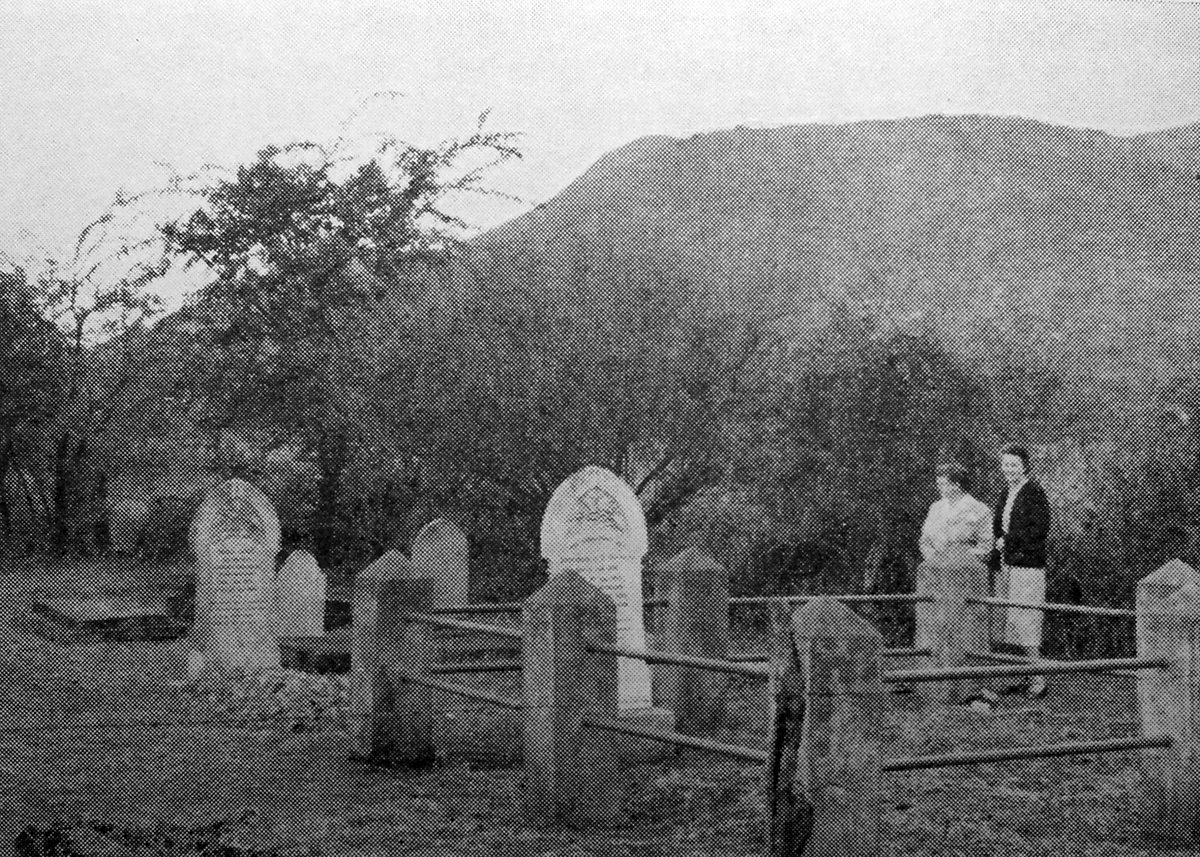
An early photograph of the cemetery at Kranspoort. The graves, from left to right, are those of Col. and Mrs I. P. Ferreira (without headstones), Mrs Engela Daneel (tall stone), Mr Frans Preiss (low stone), Rev. and Mrs Alexander MacKidd (low stone), Mrs Johanna Daneel (hidden behind), and Rev. and Mrs Stephanus Hofmeyr (in front). Photo: Lig in die Soutpansberg / Die Sendingwerk van die Nederduitse Gereformeerde Kerk in Noord-Transvaal 1863 – 1963. |
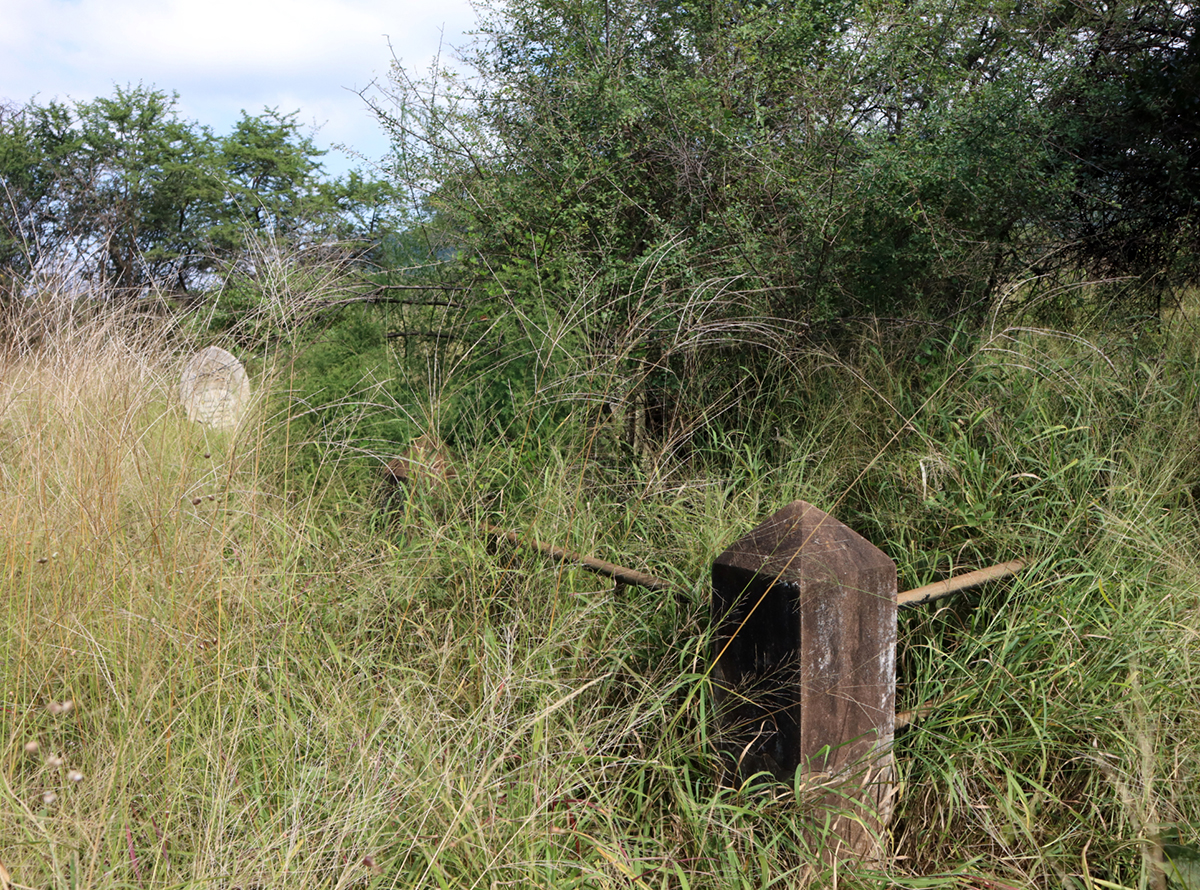
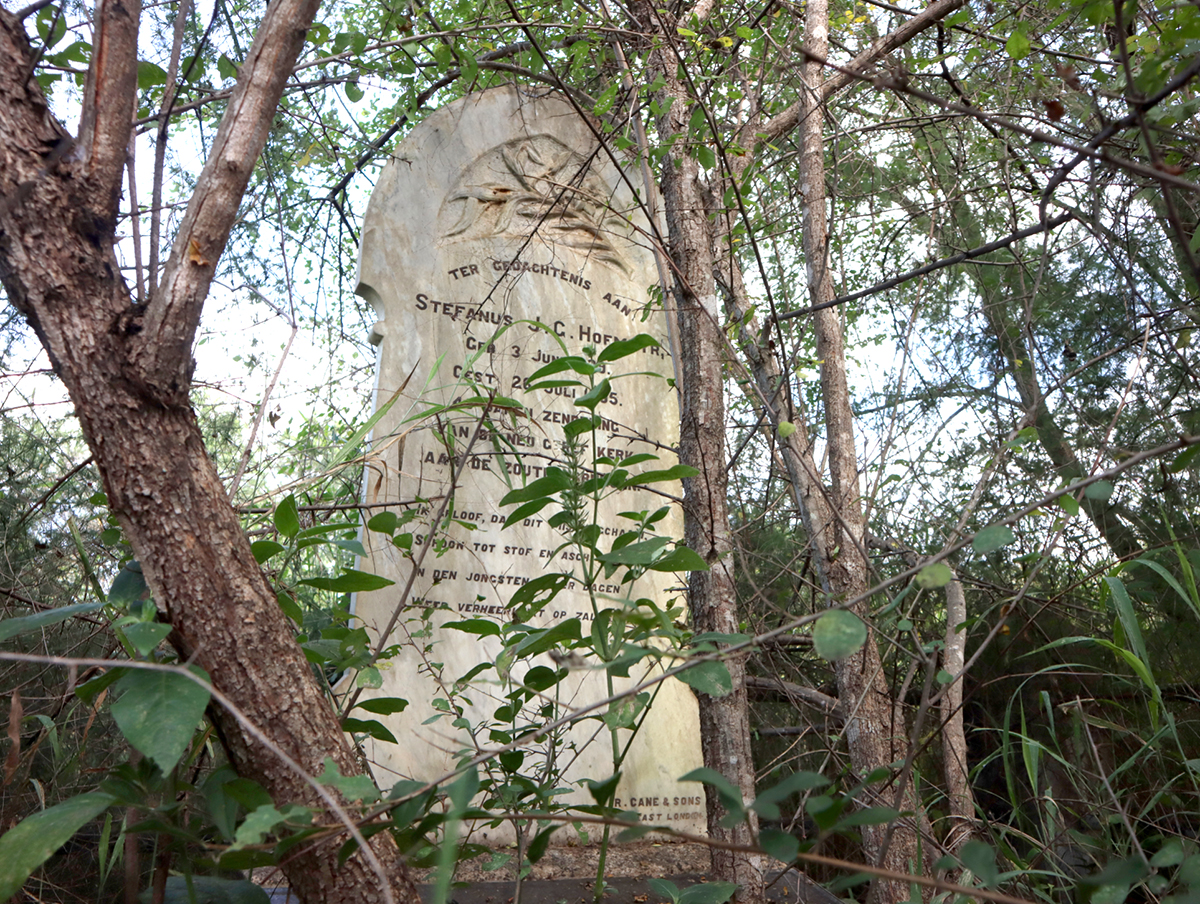
The once-pristine cemetery is fenced off but so overgrown that few graves are visible. Rev MacKidd and his wife are said to have been reburied there in 1922, but their graves are almost impossible to find. The grave of Stephanus Hofmeyr, who died on 26 July 1905, is still there, but almost completely obscured by trees and shrubs.
 |
|
The grave of Stephanus Hofmeyr (right) is completely overgrown and inaccesible. To the left is the grave of his daughter, Engela Daneel, |
 |
|
The grave of Stephanus Hofmeyr is almost completely inaccessible. He died on 26 July 1905, three days after the death of his daughter, Engela Daneel. |
A few families still live in houses on the farm, not far from where the church once stood. When asked why the historic buildings were destroyed, no one seemed to know.
“They just came one day with a back actor and knocked it down,” said one resident, who did not want to be named. He added that they also used the machine to try to remove the mango trees.
A gravel road leads up the mountain, seemingly to nowhere in particular. Asked what it was being used for, a resident remarked that people came to collect wood from the mountain.
Call for action
The Democratic Alliance’s Marie Helm, who oversees the province’s agriculture and rural development portfolio, visited the farm a few weeks ago. For Helm, the mission station is more than just a place in the province she serves — a great-uncle of hers, Rev SP Helm, first arrived at Kranspoort in 1887.
She called on the Limpopo Department of Agriculture and Land Reform to resolve the ongoing conflict between the Kranspoort CPA factions, which she said threatened the viability of the restitution award.
Helm said that during their visit, it was clear that sites were being demarcated and allocated, and that a squatter camp was developing at the entrance to the property and along the R522.
“Apart from a few goats and cattle roaming around, no substantive agricultural activity was noted,” she said. She added that a case of malicious damage to property was filed at the Mara Police Station last year.
During the oversight visit, allegations also surfaced that members of the SAPS were grazing their own cattle on the property without permission and at no cost.
Where to from here?
Efforts to get comment from the Limpopo Provincial Heritage Resources Authority (LiHRA) drew a blank. None of the phone numbers listed online works, and emails to officials went unanswered. The LiHRA is the department mandated to enforce the National Heritage Resources Act.
The court case between the CPA factions is ongoing. The attorney for one of the parties, Mr David Maree, said the case was heard in the Limpopo High Court in September last year, but the judge has yet to issue a ruling. Maree declined to share court documents, saying he needed permission from his clients.
It is also unclear whether the police are investigating the matter. Helm said she had attempted to get information from the station commander but had been refused access as she was not the complainant.
Written by
Anton van Zyl
Anton van Zyl has been with the Zoutpansberger and Limpopo Mirror since 1990. He graduated from the Rand Afrikaans University (now University of Johannesburg) and obtained a BA Communications degree. He is a founder member of the Association of Independent Publishers.

ADVERTISEMENT: