

ADVERTISEMENT:
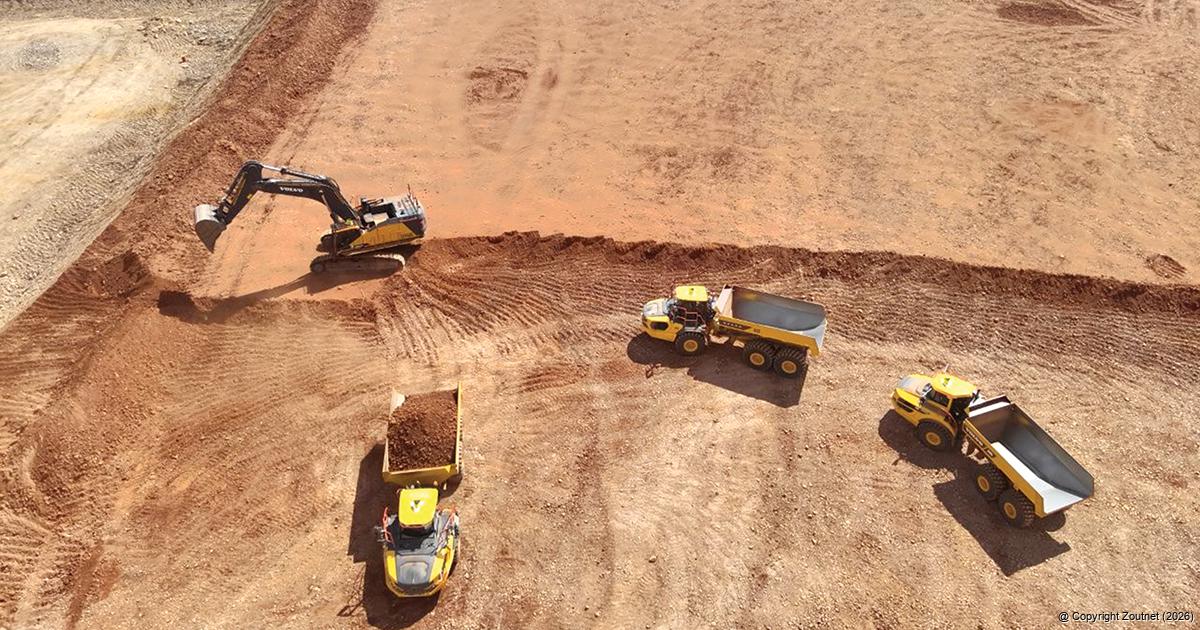
MC Mining’s box-cut development at its Makhado Project in the Nzhelele Valley, just north of the Soutpansberg. Concerns were raised this past week when it came to light that test results from boreholes on a nearby property showed high concentrations of arsenic and manganese in the groundwater. Although the report does not directly attribute the contamination of the water to MC Mining’s coal-mining activities at the flagship Makhado Project, environmental groups do. Archive photo: MC Mining.
Arsenic scare near Makhado mine
News Date: 12 September 2025
A recent press statement from the Democratic Alliance (DA) in Limpopo has ignited widespread alarm in the Nzhelele region, following reports of alarmingly high concentrations of arsenic and manganese in groundwater. The DA is demanding an urgent investigation, strongly implying that the toxic contamination is linked to the newly commenced operations at the Makhado Colliery, owned by MC Mining.
According to a press statement released on 4 September, the DA says it has written to the MEC for the Department of Economic Development, Environment and Tourism (LEDET), Tshitereke Matibe, urging immediate intervention. The elevated levels were discovered in water samples from boreholes situated east of the N1, particularly near the townships of Fripp and Mudimeli in the Makhado Municipality. These findings, detected by a recognised environmental consultancy acting as an external auditor, indicate a "serious health risk" for community members who rely on this water for daily consumption, as well as for the farming community and other users. The DA emphasises that the government has a constitutional obligation to protect citizens' right to an environment that is not harmful to their health.
The external auditor's report, sent to Ms Cecilia Mashaba at the Department of Water and Sanitation’s (DWS) regional office for regulation, compliance and enforcement in Polokwane on 27 August, noted a "significant decline in groundwater quality over the past 12 months". Of particular concern were the high levels of arsenic and manganese found in specific boreholes. The report from Core Environmental Services, acting for Manupont 124 (Pty) Ltd (the landowner requiring regular water quality assessments under its Water Use Licence), noted that "the only significant change in the surrounding environment is the commencement of mining activities at the Makhado colliery towards the end of 2024”. While Manupont did not claim a direct link, they stressed the invaluable need for an investigation by relevant authorities. Manupont has since installed a Reverse Osmosis Water Purification Plant for its own staff and guests, highlighting the dire situation for surrounding farms and communities who lack such facilities.
This unfolding crisis has been described as a "lived reality" that civil society groups have long feared. Lauren Liebenberg from Living Limpopo, an environmental advocacy movement, expressed extreme alarm: "We are deeply alarmed that poor and vulnerable communities living in the Nzhelele and Sand River catchments may now be exposed to poisoned water - exactly the outcome civil society has been warning about for years." Liebenberg highlighted that in a drought-prone province like Limpopo, water-intensive industries such as open-pit coal mining and steel manufacturing inevitably lead to water depletion and toxic pollution. She underscored that the greatest risk falls on "diffuse water users"—predominantly poor, rural, often female-headed households—who are the first to suffer when groundwater is disturbed.
Living Limpopo's Facebook post on 5 September intensified their stance, stating: “Less than a year after MC mining illegally broke ground on Makhado Colliery without environmental authorisation, dangerously high levels of arsenic poisoning have been detected in groundwater surrounding the mine. This is more than an environmental disaster – it’s a social justice crisis. The poorest and most vulnerable communities must drink contaminated water, so foreign corporate interests can profit.” Living Limpopo, a coalition of conservationists, farmers, community representatives, and activists, has consistently resisted turning Vhembe into a "sacrifice zone" for coal and steel.
Adding to the chorus of concern, the Nzhelele Boerevereniging (Farmers’ Association) also wrote to Mashaba at the DWS on 29 August. Chairman Kobus Vorster expressed profound concern, not only for the health of community members but also for their animals, which consume this water and are considered the farmers' "lifeblood". The association echoed the concern that the mining activities at the Makhado Colliery might be responsible for the decline in groundwater quality and called for urgent action from the DWS.
In response to media enquiries regarding these serious allegations, including specific questions about the link between their activities and the contamination, MC Mining spokesperson Mr Andrew Modise issued a somewhat evasive response on 10 September. Modise stated: “MC Mining Limited re-affirms that it operates in accordance with established environmental principles and good governance, which includes ground water monitoring, the results of which are regularly submitted to the regulatory authority. The Company maintains its position of compliance with the conditions of the water use licence for its Makhado Project.”
Modise's statement, while reaffirming MC Mining’s commitment to compliance and ground-water monitoring, did not directly address the specific insinuations that MC Mining’s open-pit mining activities at the Makhado Project might be causing the arsenic contamination, nor did it elaborate on the frequency of their own water quality tests or specific contingency plans to safeguard against pollution as requested by the media. This has left many stakeholders seeking more direct answers amidst a growing public-health and environmental crisis.
Written by
Andries van Zyl
Andries joined the Zoutpansberger and Limpopo Mirror in April 1993 as a darkroom assistant. Within a couple of months he moved over to the production side of the newspaper and eventually doubled as a reporter. In 1995 he left the newspaper group and travelled overseas for a couple of months. In 1996, Andries rejoined the Zoutpansberger as a reporter. In August 2002, he was appointed as News Editor of the Zoutpansberger, a position he holds until today.

ADVERTISEMENT: